Mari Mahr + Antony Schrag + Residency in Finland

I came across Mari Mahr's work at CCA in Glasgow a few weeks ago.


http://marimahr.com/index.html

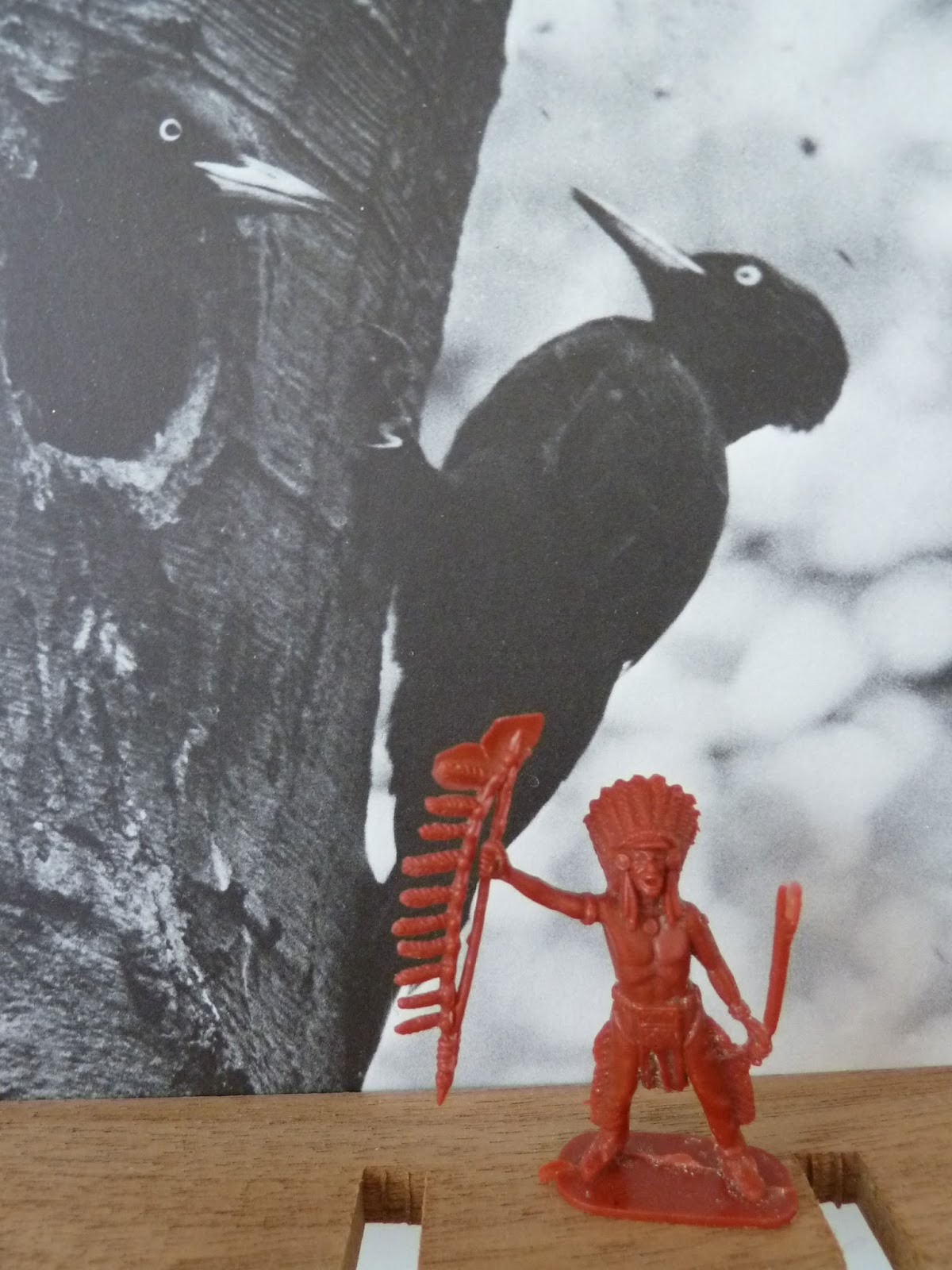
There is something about it which reminds me of some of the work I was doing in The Netherlands (see images below); working with objects over found photographs, and making short videos playing with objects over some of my own still images. I really like the consistency of her use of black and white film and it is always a pleasure to discover and admire the work of someone still living and making.



Someone else whose work I had the pleasure of coming across is Antony Schrag. A Glasgow based artist whose website alone is an excellent creative act.

http://www.anthonyschrag.com

He describes his approach on his website,

'I don’t do many exhibitions because I am conflicted about ‘objects’ and am afraid of the permanence they suggest....which is an overly-complex way to say that I prefer to ‘work with people’ in a participatory manner instead of making things to put in galleries.'

I like his commitment to a non-object based artistic practice. Having been gradually becoming more and more interested in participatory practice in general I have enjoyed looking around his website. I also recently finished an interesting book which I bought last year but only finished recently - Grant Kester's Conversation Pieces - about dialogical art practices and concepts of communities.

http://visarts.ucsd.edu/faculty/grant-kester

& link to the book

http://www.ucpress.edu/book.php?isbn=9780520275942

Since completing the participatory photography facilitation training by Photovoice (see previous post http://dindafass.blogspot.fi/2015/12/catching-up-with-2-0-1-5-1-jan-march.html) in February 2016 I have been thinking about how to more broadly apply some of the skills I learnt on that training to other creative situations.

I realised on that training that to facilitate a group successfully I would need to not think of myself as the artist or photographer, that it would in fact be unhelpful to the aim of getting a group to take ownership of a photo project, and that the whole paradigm of artistic work in communities is certainly more complex than it sounds.

What is the artist? The expert? The initiator? The mirror? Where are the power structures visible in the idea of an artist arriving to do artistic 'work' with a community. Where is the community? Is it a coherent and tangible thing? One of things that Antony Schrag also talks about on his website is the value of conflict. That all communities are essentially conflicted rather than consensual. More interesting writing from Schrag on conflict and participation here:

https://conflictsocialconflict.wordpress.com

I have just arrived in Finland to do a residency at AIR Frosterus in a small community called Karsamaki (6 hours north of Helsinki), I had written quite a detailed proposal to apply for the residency and up until a few weeks ago I thought I would be doing what i had planned. Always good to have a plan, but always good to have the freedom to veer away from it.

I'm curious to know more about the community here and rather than imposing my creative ideas on it, i want to wait until the opportunity arises to have conversations with the people here, and to find out how their community works, what interests them, and how they view the visiting artists.

Meanwhile I brought plenty of materials to work with. It is really a beautiful place, right by a river, with plenty to explore both inside and out.

https://artistresidencekattilakoski.wordpress.com/cooperatives-member-associations/


 don't look away.

a striped mystery


i have been thinking about this for a while. in october 2014 i was in nicosia where i took this photograph of a woman on the threshold of a workshop. in 2015 i spent several months working and living in nicosia which i have written about in previous posts. i bought the striped dressed for 1 euro from a charity shop. looking back at the photographs from the previous october i realised it could be the same dress that the woman is wearing. it is hand sewn, and i wonder then; if she made it, and why she stopped wearing it......


don't look away.

catching up with 2 0 1 5 // 3 NICOSIA___CYPRUS

postcards from cyprus / vision of nicosia


during the winter of 2014 angus reid and i started thinking about doing a project in Nicosia, Cyprus. having spent a few days there we realised we wanted to return for a self-directed residency with the intention of making a portrait of the city.

we made our plans and the work i did in glasgow (see previous blog entry http://dindafass.blogspot.co.uk/2015/12/catching-up-with-2-0-1-5-1-jan-march.html) allowed me to take time out from edinburgh, and in April 2015 i flew to cyprus for a three month work period.

part of our project was to produce postcard editions of our work as we went along as a way of distributing our images, giving people a free hand held version of our work, and inviting people in Nicosia to respond to the work. we used the Scottish Storytelling Centre as a 'post restante' address and although a few cards did find their way back to Scotland, it was during our exhibitions in Nicosia where we had the full set of postcards available in a stand that we collected the most comments. a couple of the final edition postcards below -


i spent the beginning part of the residency cycling around the outer limits of Nicosia, i was curious to find out where the city met the industrial / rural. i came across plenty of blockages, flags demarcating division, and entropic zones where the static nature of the island's division made itself perfectly clear. although i wanted to see these things with my own eyes i decided (in keeping with my intentions for the work in Nicosia) to focus on the living city and it's people; to make photographs of citizens from both sides of the city going about their daily lives as it unfolds in the street. i learnt that i'm not an assignment photographer, i am happier working as a flaneur, keeping my camera with me wherever i go. i make better images this way.

in addition to the the street photography, which i made with a 35mm camera and black and white film an opportunity presented itself to me which i couldn't refuse. i was able, accompanied by angus and a (very patient) UN soldier, to walk along the green line, a military buffer zone which divides the north of the city from the south, city streets which have been empty since 1974. the previous weeks i had been thinking about eyes - the eyes of the street being represented by the shutters of the shops coming up and down daily as the course of the day plays out - and i knew immediately that i wanted to walk the length of the green line making images with my eyes closed using disposable cameras. i will write more in another post about eyes closed photography and the conscious de-skilling of the photographic act. out of these two bodies of work i made the work below, a slideshow / video   eyes open / eyes closed ,  for the exhibitions in september. all the colour images were made with my eyes closed guided by non-visual cues 


we had two exhibitions to share our work in Nicosia, one in the north in an ancient municipal building, the Bedesten, within the city walls, and the other in a commercial gallery space outside the city walls in the south. alot of work! and very interesting to experience the differences between showing in a commercial space and a community centred space. what with translations of our press release, framing of paintings and hiring of monitors and moving all this back and forth across the border several times in languages not our own meant we couldn't have done any of it without the help of the amazing friends we made in the short space of time that we were working there.

to see the excellent work that angus made in Nicosia please follow the link below

http://www.angusreid.co.uk/works-for-sale/paintings/

to read some press coverage about our exhibition please follow the links below

http://cyprus-mail.com/2015/09/12/nicosia-as-you-have-never-seen-it-before/

http://in-cyprus.com/vision-of-nicosia-2/

catching up with 2 0 1 5 // 2 short film idem / ipse


Close the door.


What parts of you can you change? What parts are immovable?


What changes do we allow? Where is the start? It’s always the same question.


Pointless rituals. Is that possible, for something to be completely pointless?


Don’t ask. I entertain my own desire.


Tied to myself. I am always tied to myself. Even if some part of me tries to fly away.


It’s dark. I start blank. I add layers. In the end I am changed


The props are down.
The curtain drawn.


---------------------------------

my friend and artistic collaborator Angus Reid helped me to edit the video. to see more of his work follow the link below

www.angusreid.co.uk

idem / ipse was screened at a Pollyanna event in Edinburgh in February.

http://www.anightwithpollyanna.com/

catching up with 2 0 1 5 // 1 Jan - March / Participatory Photography - Glasgow

it's been a while since i've posted here but it's been on my mind to update. 2015 has been a busy and fruitful year.

early in the year, from january to march i worked as a workshop assistant for Becky Duncan of Open Aye. following on from my photography project (www.thecombinesproject.com) i was searching to find people doing interesting participatory activities with photography in Scotland in order to build up networks and partnerships. i came across the participatory photography methodology and Becky's work. Becky runs a community interest company running participatory photography workshops with third sector clients - school groups, youth groups, refugees and homeless people to name just a few. to find out more about her work please follow the link below.

http://www.openaye.co.uk/

to find out more about participatory photography methodology please follow the link below.

https://photovoice.org/

together we worked on two projects in Glasgow; one a primary schools project for Scottish Natural Heritage, and the other a weekly youth group in Burnhill for Healthy and Happy on the subject of alcoholism. it was extremely interesting for me to see how Becky facilitates groups and to see how photography skills can be used to bring children and young adults closer to and able to reflect on their local environments.

to see the work with the school groups in action follow the link below. (i'm black bobble hatted and visible in a few frames.)

https://vimeo.com/123083402

sunday film / 1


new projects.......
don't look away.

photography, always and again


ah well, it doesn't go away the photographic urge. but i slowed down alot with taking photographs recently, and used up 36 exposures over 6 months. i've been reading photographic theory and related fiction - lucy soutter, vilem flusser, victor burgin, w.g. sebald, jean baudrillard, ivan vladislavic. went to a great lecture about writing and imagery given by art historian james elkins

http://writingwithimages.com/

and attended an archives for the future conference

http://archivesforthefuture.wordpress.com/

organised by mnemoscape 

http://mnemoscape.wordpress.com/

at westminster university. i'm not sure to what end. trying to gather my thoughts about my approach and what exactly is interesting to me.
i got to here:

i have been making photographs for 20 years already. by now i have built up a personal archive which reflects the various visual interests that i have been engaged with over the years. i have used many different cameras, formats which are no longer in use, and formats which I continue to use including digital, 35mm analogue, and medium format. i am interested specifically in the photographʼs potential as a medium which can question itself and itʼs relations to memory making, itʼs relations to fact and fiction, itʼs potential as a narrative making device rather than thinking about itʼs function as a purely image making medium.

the photograph is intrinsically unstable, it is de-stabilised in both itʼs material form (in both analogue and digital techniques of production) and in its slippery relationship with the truth and meaning making. i have developed a distance to my own images which are, although sometimes personal and reflect a life lived, has allowed me to look at photographs in an analytical way. photographs are open to wide degrees of interpretation even if they fit into various photographic genres. photographs act as collective memory gathering and making devices, enabling people to project, reminisce and imagine. i am interested in photographs which enable open interpretations as to what each image means.

my photographs are domestic in nature, i call them domestic on purpose as i have never used them as a professional photographer would, they are not for reportage, they do not claim to document events, i have never made enlargements. the images themselves range from street photography, discarded items, domestic arrangements, natural scenes, journeys, toys, skies, friends, locations. i have never used a studio, i find things how they are. everyday objects found in places and spaces, incidental arrangements of how my space happens to be organised, other peopleʼs spaces, decay, the ordinary turned on its head. i am interested in the idea that the subjects of my photographs find me, and i them. (a typically baudrillardian idea)

i like to use a hands off approach to interpreting and working with images through writing, i look at the image and let the material and environmental circumstances that i intuit in the image lead me to a narrative or fragment of a narrative, this is based on remembering and recollecting the events that led up to the taking of the picture, or it might be completely made up. This generous function that a photograph has is something that intrigues me. i understand the photograph as a kinaesthetic device, enabling recall of material conditions and bodily sensations.

photographic image making is partly about an aesthetic impulse, partly about registering and recording daily events, and partly about imagined realities and futures. this gives a single image a huge potential for multiple interpretation and function. in 2011 i started a combining activity which led eventually to an ongoing participatory photography project called ʻthe combines projectʼ (www.thecombinesproject.com). in this combining process it is possible to disengage completely from the ideas of composition, photographic subject, and technique and treat images as interchangeable, democratic and freed from their functions as documents of truth or beauty.


so there it is, or some of it. it needs work. and time.


don't look away.


r o c k s / n o t e s


slowness
rocks
rocks as friends
rocks immovable
rocks movable
silence of the material world
a body speaks just by its presence
noise of conscious life
conscious / unconscious noise
silent body: is this possible?
silent and still
the mineral body
human life span / rock life span
conversations with rocks


don't look away

kisses of fire


short film by dinda fass and angus reid
plastic dreams
don't look away.

d i s p e r s e

the fall of grass seeds as i pull them with my fingers off their stem, each one a different texture, a different weight.
-----


tree and me part one


screening in collaboration with Modern Edinburgh Film School + Rhubaba
'six thousand posters for giants and dwarfs'
14 - 16 June 2013


don't look away.

echo_ohce // 2


spring portfolio


don't look away.

skimming, the start, new work


she is an amazing old bird my granny and as it turns out she took quite a number of photographs. when she moved house last year she passed on a big bag of slides. i went through them and picked out some images to work with. there were alot of touristy ones, alot of religious ones; i chose the images which gave me a jump, or an echo of something else.

of course, being me, this was all done on an intuitive level but i think each image led me to a question. or several. it has got me thinking about the photograph as a cipher; that within each image there are numerous codes to be understood, or not understood. because i still don't feel comfortable with photographic prints any larger than 7 x 5 i am continuing to use photography in a multi-disciplinary way; as a tool for writing, for ways of getting into ideas for moving image, attempting to get away from the photograph as image only, and away from its association with painting (in terms of it's material value, not in terms of image making in general) 

at the same time that i was looking through my granny's slides i was cataloging all the video that i made during my master study, in particular re-visiting some experiments where i played with a moving object over the top of a still image, there is a strange tension which i noticed in these works, a combination of a kind of giddy looseness with a static view, which is a result i think of the combination, within the frame, of still and moving image. so it became my starting point to explore more this tension between still and moving image, which has lead me first of all to the images above, which are a combination of slides with layers of notes, texts and drawings lifted from my collection of sketchbooks. i want to work on some videos using the slides as a background, with me playing with objects moving over the top. these works are an interim phase i think, they give me a key to the sort of object forms i could use, and i like the idea of a drawn element appearing within the time-frame at certain points.

i have been thinking about the activities i am doing; lifting. transferring, skimming. and to what extent does a photograph skim by it's nature, both conceptually and materially.

don't look away.